
Tale of Two Patients Tale of Two Patients

Serena hesitated. He didn't ask me any questions and came to that conclusion too fast, Serena thinks as she itched her arm. Maybe it would be better to see a specialist to learn more about her psoriasis and how it could impact her life.


Tale of Two Patients Tale of Two Patients

"I understand," her doctor says. "I know a dermatologist specializing in psoriasis."

  • image-1
    it was so nice to meet you today!
  • image
    same! how did your appointment go?
  • image-1
    it went ok... he gave me a prescription cream to use but i don't know much about psoriasis
  • image
    honestly, I asked for a dermatologist referral. I want to see a skin expert since I have psoriasis too! you should, too!
Tale of Two Patients Tale of Two Patients Tale of Two Patients

How's
Serena


?

Before her appointment with a dermatologist, Serena focuses on getting all the information she can about how psoriasis could impact her health and ways to manage it, including lifestyle changes, so she can have a productive appointment.

She reads through as much information as possible to help distract from the fact she has to vacuum her skin flakes several times a day. But that is far from the biggest impact psoriasis will have on Serena’s life.

CLCI

Cumulative Life Course Impairment: Chronic diseases can exert cumulative negative impact along an individual's life path, resulting in missed opportunities and influencing their ability to fulfill their full potential. The negative impacts of psoriasis can be substantial.2 Without appropriate psoriasis management, people with psoriasis are at risk for increased CLCI.2,3,4

clci

Physical

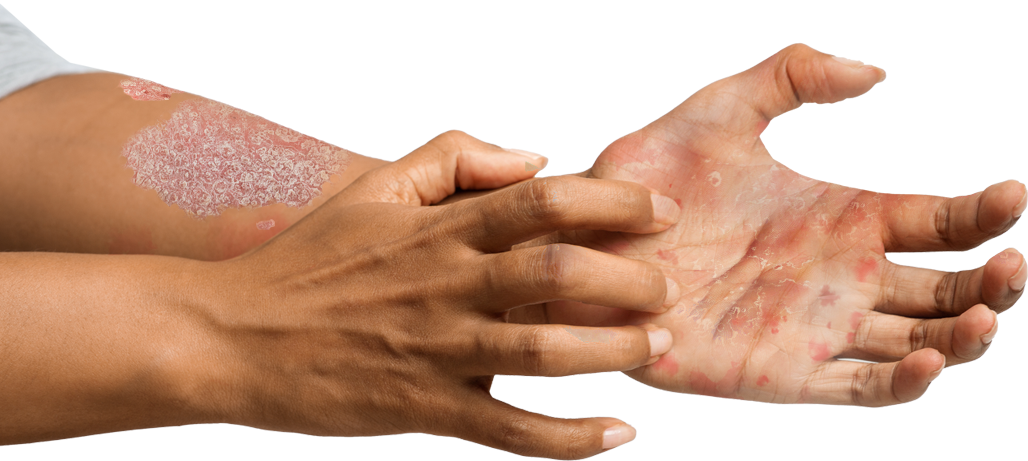
Psoriasis can appear anywhere, but like many people Serena is affected primarily on the outside of her elbows, knees and scalp.5 Symptoms like itchiness, burning, flaking and stinging lead to physical pain and discomfort.5,6

Physical

Emotional

Serena felt empowered to ask questions and to see a dermatologist. For some people, it can take more than two years to get a dermatologist referral.7

Emotional

Social

Could vacuuming just be an excuse for Serena to stay home and avoid meeting new people? 94% of people with psoriasis say their condition impacts their social life.5

Social
Economic
Tale of Two Patients Tale of Two Patients Tale of Two Patients

Dermatologist
Visit


1

Serena is more than prepared for her dermatologist appointment and knows how important it is to be open and honest with her dermatologist. She brings pictures and a list of her management goals and walks into her appointment with confidence.

img

Her dermatologist is impressed. She takes the time to explain her moderate to severe psoriasis diagnosis and all the management options they have for her psoriasis. Serena leaves feeling like they are on the same team.

clci
Tale of Two Patients Tale of Two Patients Tale of Two Patients

How's
Serena


?

At first, Serena is feeling better. But even on her new management plan, she is experiencing flares that make her self-conscious. She wears sweatshirts all summer and calls in sick to work so she doesn't have have to face her colleagues.

Is this what it was supposed to be like? She wishes she could just reach her goal already — feeling comfortable in her own skin. But like with many other psoriasis patients, her first disease management plan may not be her last.

clci-serena-check-2

Physical

Approximately 20% of people with psoriasis have moderate to severe disease, like Serena.8

Physical

Emotional

When physicians take the time to provide information about psoriasis and the rationale for disease management plans, as Serena's doctor does, it improves the quality of care and outcomes.9,10,11

Emotional

Social

Having visible symptoms makes Serena feel self-conscious. People with psoriasis frequently feel stigmatized and report being excluded from normal social environments, including schools, workplaces and swimming pools.5 They also preempt the stigma by avoiding situations where their skin might be exposed — like Serena did by working from home.12

Social

Economic

Around 30% of people with psoriasis report loss of work productivity.13 How could Serena's potential career be harmed by this?

Economic


I think ‘Don't let psoriasis separate us’ is a good message for people with and without psoriasis. When a person without psoriasis sees a flare, they get scared and think it is contagious. A person with psoriasis does not tend to make relationships because of this. This separation is one of the most important parts affecting mental health in people with psoriasis.

– International Federation of Psoriasis Associations (IFPA)


Dermatologist
Visit


2

patient-6 patient-6

At a follow-up appointment with her dermatologist, Serena decides to speak up. “I’m not happy,” she admits. “I’ve been on this regimen for a while now and my psoriasis is still visible. I passed on tryouts for the local soccer league because of it. What else can we do to help me reach my goals?”

The dermatologist says she will put her on an advanced therapy. She explains how it works and why she thinks it should be considered.

patient-6 patient-6
clci-serena-check-2
  • image
    hey! long time no talk
  • image-1
    hiiiiii how’re you? how was the derm?
  • image
    she gave me something to try. haven’t seen much improvement
  • image
    i’m reading up on other options to manage my psoriasis
  • image-1
    like lemon juice?
  • image
    omg no!
  • image-1
    i finally made it to a derm! still not feeling optimistic, though
Tale of Two Patients Tale of Two Patients Tale of Two Patients

How's
Serena


?

It doesn’t happen overnight, but over time Serena begins to notice more time between her flares and a slowing of itching and flaking. She finally goes shopping for new running shorts.

Is this it? For the first time in a long time, Serena can imagine a different path ahead of her. She wants to tell the whole world about her journey. Maybe she could start a blog? Good thing she has great Wi-Fi.

clci-serena-check-2

Physical

Serena isn’t just imagining feeling better. An increase in skin clearance (from approximately 75% clear to approximately 90% clear) can lead to 50% increase in likelihood of achieving an improved quality of life.15

Physical

Emotional

Individuals with good knowledge of their psoriasis, like Serena, more frequently reported complete satisfaction with care compared with those individuals with poor knowledge.16

Emotional
Social
Economic

Dermatologist
Visit


3

Tale of Two Patients Tale of Two Patients

Serena is beaming at her next appointment.


Tale of Two Patients Tale of Two Patients

“You’ve responded really well to our plan,” the dermatologist says. “And you seem happier. I’m glad we aligned on your goals from the beginning and stayed on the path.”

“Now, I think a patient support program will help you get personalized care to stay clear.” She adds, “You could also mentor someone who is still struggling.”


clci-serena-check-2


"It is very important to connect your doctor and the psoriasis community, so you can get updated and be informed about psoriasis. With the right information, you can make the right decision to meet your goals."

– IFPA

Tale of Two Patients Tale of Two Patients Tale of Two Patients

How's
Serena


?

Inspired by her journey, Serena creates a psoriasis social media account and meets new friends in the community, helping those starting out by sharing the importance of talking to your doctor and working together to set management goals. She thinks back and wonders how Valerie is doing. 

Now, Serena wants everyone to know that living your best life with psoriasis is possible, by working with your dermatologist to manage psoriasis in a way that’s more than skin deep.

Tale of Two Patients
clci-serena-check-2

Physical

More individuals, like Serena, who achieve higher levels of complete skin clearance (approximately 90–100% clear) within three to four months of initiating an advanced therapy maintain a higher quality of life after one year versus those individuals achieving partial skin clearance (approximately 75-80% clear).15

Physical

Emotional

By using her goals as a framework with her dermatologist, Serena was able to get down to business. Timely and successful collaborative management of psoriasis may help limit an individual’s risk for CLCI and improve their life path.2,3,4

Emotional

Social

As Serena experienced by finding support on social media, connecting with the psoriasis community online and off can have a positive impact on chronic disease.17,18

Social

Economic

Joining a patient support program can help save Serena money—one study showed 23% lower 12-month medical costs incurred by those in patient support groups than those who were not.19

Economic
  • image
    happy holidays!
  • image-1
    thx
  • image
    how are you?
  • image-1
    i’m ok. psoriasis still flaring. at least it’s sweater weather, right?
  • image
    oh no! i am on a different plan to manage my psoriasis and it is making a real difference!
  • image
    you should try to see a psoriasis specialist—you need to tell them how you feel! my derm is the best, i’ll email you their info
  • image
    hey, did you ever get the info i sent last week? let me know if it works out!


Tale of Two Patients Tale of Two Patients

"So happy you’re coming to the beach day this weekend,” says Serena. “Are we more excited for the soccer game or the bonfire afterwards?"


Tale of Two Patients Tale of Two Patients

“Actually, I can’t wait to meet everyone!” Valerie replies. “It’s my first party in a long time.”


No Two People with Psoriasis Have the Same Tale


The impact of someone’s individual psoriasis experience can touch all areas of their life—for their entire life.5 Because psoriasis impacts so many different parts an individual’s life, achieving disease management goals, like clear skin, could lead to an improved life path.36 Timely and successful collaborative disease management between an individual and their dermatologist is needed to help limit their risk for increased CLCI—and improve their chances for a happier ending.2-5,27

clci-serena-summary
Tale of Two Patients
clci-valeri-summary
Tale of Two Patients


The next step is in your hands:

Get started changing your own CLCI story in psoriasis

Take a deeper dive into the CLCI of psoriasis

Share

Privacy Statement    Terms of Use    Copyright © 2021 AbbVie Inc.

Privacy Statement    Terms of Use
Copyright © 2021 AbbVie Inc.


Tale of Two Patients

ALL-IMMD-210068

ALL-IMMD-210068

Tale of Two Patients - Serena Tale of Two Patients - Serena

Serena’s Tale

Serena communicated what she wanted from the start—a disease management option that would help her get her groove back. She did her research and spoke up about seeing a psoriasis specialist. With her dermatologist, she was able to set goals about what she was looking for from her management plan—from the start. While the first option her dermatologist put her on wasn’t a fit, she and her doctor continued to evaluate her goals beyond just skin—like making goals on the soccer field. Those open conversations together meant Serena was able to get on a therapy that worked for her. Now clear, Serena is committed to helping other people feel empowered to speak up.

EXPERIENCE FULL JOURNEY
Tale of Two Patients - Valerie Tale of Two Patients - Valerie

Valerie’s Tale

Doubt, low confidence and lack of understanding plagued Valerie from her diagnosis. Her disease worsened, and Valerie began losing the relationships and activities that made her life great. The emotional and psychological effects of untreated psoriasis grew larger as Valerie bounced between doctors and therapies. Finally, she was recommended a psoriasis specialist who took the time to ask Valerie about what she really wanted to get out of her disease management beyond just skin. Newly empowered and aligned with her doctor on goals, Valerie was finally able to work with her dermatologist to find a plan that made a difference—but the years and burdens it took to get there have a cost.

EXPERIENCE FULL JOURNEY

  References

  1. Parisi R, Iskandar IWK, Kontopantelis E, et al on behalf of the Global Psoriasis Atlas. National, regional, and worldwide epidemiology of psoriasis: systematic analysis and modelling study. BMJ. 2020; 369: m1590.
  2. Kimball, A.B., et al. Psoriasis: is the impairment to a patient's life cumulative? J Eur Acad Dermatol Venereol. 2010 Sep;24(9):989-1004.
  3. Ros, S., et al. Cumulative life course impairment: the imprint of psoriasis on the patient's life. Actas Dermosifiliogr. 2014 Mar;105(2):128-34.
  4. Linder, M.D., et al. Psoriasis - The Life Course Approach. Acta Derm Venereol. 2016 Aug 23;96(217):102-8.
  5. World Health Organization. Global Report on Psoriasis. 2016. Available at: http://apps.who.int/iris/bitstream/10665/204417/1/9789241565189_eng.pdf. Accessed June 1, 2021.
  6. National Psoriasis Foundation website. About Psoriasis. Available at: https://www.psoriasis.org/about-psoriasis. Accessed June 1, 2021.
  7. Khalid, J.M., et al. Treatment and referral patterns for psoriasis in United Kingdom primary care: a retrospective cohort study. BMC Dermatol. 2013 Aug 19;13:9. doi: 10.1186/1471-5945-13-9.
  8. Menter, A., et al. Guidelines of care for the management of psoriasis and psoriatic arthritis: Section 1. Overview of psoriasis and guidelines of care for the treatment of psoriasis with biologics. J Am Acad Dermatol. 2008 May;58(5):826-50.
  9. Feldman, S.R., Approaching psoriasis differently: patient-physician relationships, patient education and choosing the right topical vehicle. J Drugs Dermatol. 2010 Aug;9(8):908-11.
  10. Feldman, S.R., Horn, E.J., et al. Psoriasis: Improving adherence to topical therapy. JAAD. 2008 Dec; 59(6):1009-1016.
  11. Richards H.L., Fortune D.G. and Griffiths C.M. Adherence to treatment in patients with psoriasis. JEADV. 2006 Apr; 20(4): 370-379.
  12. Sampogna, F., et al. Living with psoriasis: prevalence of shame, anger, worry, and problems in daily activities and social life. Acta Derm Venereol. 2012 May;92(3):299-303.
  13. Fujii RK et al. Value in Health. 2012;14(4):A107.
  14. 12 IPSOS - EU5 Therapy monitor Q4 2019 – PsO patients.
  15. Elewski, B., et al. Psoriasis patients with psoriasis Area and Severity Index (PASI) 90 response achieve greater health-related quality-of-life improvements than those with PASI 75-89 response: results from two phase 3 studies of secukinumab. J Dermatolog Treat. 2017 Sep;28(6):492-499.
  16. Wahl, A.K., Moum, T., et al. Psoriasis Patients’ Knowledge about the Disease and Treatments. Dermatology Research and Practice. vol. 2013, Article ID 921737, 7 pages, 2013. doi:10.1155/2013/921737.
  17. Patel, R., Chang, T., et al. Social Media Use in Chronic Disease: A Systematic Review and Novel Taxonomy. Am J Med. 2015 Dec;128(12):1335-50. doi: 10.1016/j.amjmed.2015.06.015. Epub 2015 Jul 6.
  18. Wald, H.S., Dube, C.E., et al. Untangling the Web—The impact of Internet use on health care and the physician–patient relationship. Patient Education and Counseling. 2007 Nov; 68(3):218-224.
  19. Rubin, D., et al. Impact of a Patient Support Program on Patient Adherence to Adalimumab and Direct Medical Costs in Crohn's Disease, Ulcerative Colitis, Rheumatoid Arthritis, Psoriasis, Psoriatic Arthritis, and Ankylosing Spondylitis. J Manag Care Spec Pharm. 2017 Aug;23(8):859-867.
  20. McCormick H.L. Am J Manag Care 2016;22:s104–7.
  21. Nicholas M.N., Gooderham M. Skin Therapy Lett. 2017;22:1–4.
  22. Finlay, A. and Coles, E. The effect of severe psoriasis on the quality of life of 369 patients. Br J Dermatol. 1995 Feb;132(2):236-44. doi: 10.1111/j.1365-2133.1995.tb05019.x.
  23. Strober B., et al. Comorbidities of psoriasis have an independent effect on impairing patient health-related quality of life and work productivity. AAD 2009. San Francisco, California.
  24. Lebwohl, M., et al. Impact of PASI response on work productivity and the effect of risankizumab on indirect costs using machine learning in patients with moderate-to-Severe psoriasis. J Dermatolog Treat. 2021 Apr 25;1-26. doi: 10.1080/09546634.2021.1919287.
  25. Gorelick J, Shrom D, Sikand K, et al. Understanding treatment preferences in patients with moderate to severe plaque psoriasis in the USA: results from a cross-sectional patient survey. Dermatol Ther (Heidelb). 2019;9:785–797
  26. Garshick, M.K. and Kimball, A.B. Psoriasis and the life cycle of persistent life effects. Dermatol Clin. 2015 Jan;33(1):25-39.
  27. Kimball A.B., et al. Increased economic burden associated with moderate to severe psoriasis compared with mild psoriasis. AAD 2010. Miami, Florida.
  28. Schoffski O., et al. J Dtsch Dermatol Ges. 2007;5:209–18.
  29. Mrowietz U., Steinz K, Gerdes S. Psoriasis: to treat or to manage? Exp Dermatol. 2014 Oct;23(10):705-9.
  30. Herron, M., et al. Impact of obesity and smoking on psoriasis presentation and management. Arch Dermatol. 2005 Dec;141(12):1527-34.
  31. Pariser D., et al. A multicenter, non-interventional study to evaluate patient-reported experiences of living with psoriasis. J Dermatolog Treat. 2016;27(1):19-26.
  32. Kurd, S.K., et al. The risk of depression, anxiety, and suicidality in patients with psoriasis: a population-based cohort study. Arch Dermatol. 2010 Aug;146(8):891-5.
  33. Rapp, S.R., et al. Psoriasis causes as much disability as other major medical diseases. J Am Acad Dermatol. 1999 Sep;41(3 Pt 1):401-7.
  34. Viswanathan, H.N., et al. Measurement Properties of the Psoriasis Symptom Inventory Electronic Daily Diary in Patients with Moderate to Severe Plaque Psoriasis. Value Health. 2017 Sep;20(8):1174-1179.
  35. Armstrong, A. W., et al. Undertreatment, treatment trends, and treatment dissatisfaction among patients with psoriasis and psoriatic arthritis in the United States: findings from the National Psoriasis Foundation surveys, 2003-2011. JAMA Dermatol. 2013 Oct;149(10):1180-5.
  36. Armstrong, A.W., et al. From the Medical Board of the National Psoriasis Foundation: Treatment targets for plaque psoriasis. J Am Acad Dermatol. 2017 Feb;76(2):290-298.
  37. Smith, C.H., et al. British Association of Dermatologists guidelines for biologic therapy for psoriasis 2020: a rapid update. Br J Dermatol. 2020 Oct;183(4):628-637. doi: 10.1111/bjd.19039.
  38. Gulliver, W., et al. Think beyond the Skin: 2014 Canadian Expert Opinion Paper on Treating to Target in Plaque Psoriasis. J Cutan Med Surg. Jan-Feb 2015;19(1):22-7. doi: 10.2310/7750.2014.13151.
  39. Takeshita, J., et al. Patient-reported outcomes for psoriasis patients with clear versus almost clear skin in the clinical setting. J Am Acad Dermatol. 2014 Oct;71(4):633-41.
  40. Feldman, S., et al. Differences in psoriasis signs and symptom severity between patients with clear and almost clear skin in clinical practice. J Dermatolog Treat. 2016;27(3):224-7.
  41. Abrouk, M., et al. The impact of PASI 75 and PASI 90 on quality of life in moderate to severe psoriasis patients. J Dermatolog Treat. 2017 Sep;28(6):488-491.
 

You are now leaving the Tale of Two Psoriasis Patients website

  • www-d.taleoftwopatients.com
  • www-q.taleoftwopatients.com
  • preview.taleoftwopatients.com
  • www.taleoftwopatients.com

A Tale of Two Patients uses cookies on the www.taleoftwopatients.com website. By using the website, you consent to the use of cookies. For more information, please see our Terms of Use and Privacy Policy.